Scuba Diving in Dominica:
Sites, Operators & What to Expect
Last updated:

Must Do

Pinnacles, walls, and black sand slopes in one of the Caribbean's most intact marine environments. Divers come back year after year for a reason.
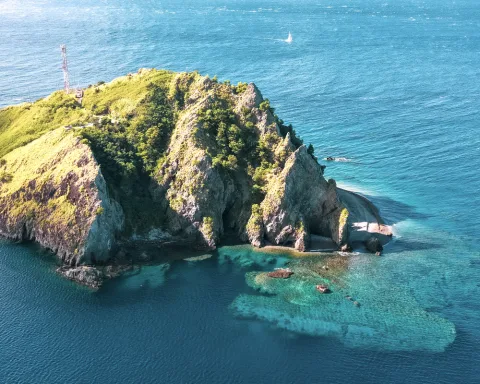
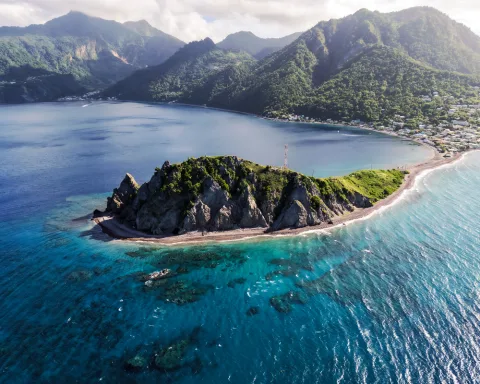
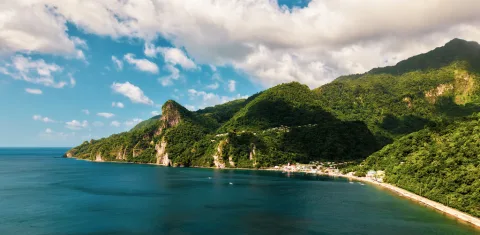
Dominica is one of the most underrated dive destinations in the Caribbean. The island sits on a volcanic shelf that drops straight into deep water, so wall dives, drop-offs and pinnacles are the dominant geography rather than the flatter reefs you find in much of the region. Underwater bubble vents, healthy coral, and a strong macro scene round it out. The headline area is the Soufriere–Scotts Head Marine Reserve in the south-west, where Soufriere Bay is the partly-submerged crater of an extinct volcano and the diving is concentrated along its rim.
If you fly to Dominica primarily to dive, a week here can match or beat much better-known Caribbean destinations.
Quick facts
| Headline area | Soufriere–Scotts Head Marine Reserve, south-west coast |
| Other key sites | Champagne Reef, Castle Comfort, Salisbury, Toucari (north) |
| Water temperature | ~26°C year-round (78 to 80°F) |
| Visibility | 25 to 30 m typical, best in dry season |
| Best season | October to April |
| Two-tank dive cost | ~US$110 to $140 with gear |
| Certifications needed | Open water minimum for most sites; some sites require advanced |
Why Dominica is a great dive destination
"I'm a certified rescue diver, so I love diving. I've dived extensively in Dominica and can't recommend it enough. Soufriere Bay and Scotts Head offer some of the best diving in the world. The wall dives are insane and the diversity of wildlife is next level. The water is around 26°C, you only need a shorty if you're doing a two-dive day. You can get away with board shorts and a rash vest if it's a single dive day. My favourite spot is Scotts Head Drop-Off, it's insanely beautiful."
Drew
Three things make the diving distinctive:
- Volcanic geology underwater. Walls drop near-vertically, sometimes for 600+ m. Pinnacles, arches, and overhangs are common. Underwater bubble vents at Champagne Reef are unique to Dominica.
- Diversity over abundance. You won't see the schooling fish numbers of Bonaire or Cozumel, but the variety of species per dive is exceptional. Frogfish, seahorses, octopuses, multiple ray species, and the occasional reef shark all show up regularly.
- Uncrowded sites. Dive boats sometimes have a single group on a famous site. The lack of mass tourism is a real advantage underwater.
The headline dive sites
Scotts Head Drop-Off
The most-recommended dive on the island. A wall that drops from about 5 m at the top to over 60 m below recreational limits, on the southern edge of the Soufriere caldera. Healthy hard corals, black coral, hawksbill turtles, and the occasional eagle ray. Visibility is consistently good. Suitable for advanced open water divers.
Champagne Reef
The signature easy dive on the island. Volcanic vents on the seabed release continuous streams of bubbles up through warm water against a healthy reef. Depth range 5 to 18 m. Common encounters: frogfish, seahorses, octopuses, juvenile reef fish. Suitable for open water divers and reachable as a snorkel from shore.
L'Abym
A spectacular wall and pinnacle dive in the Soufriere area. Visibility commonly 30 m+. Strong currents at depth, advanced divers only.
Soufriere Pinnacles
Several volcanic pinnacles rising from the floor of Soufriere Bay. Excellent macro diving and mid-range wall sections. Suitable for open water with some experience.
Castle Comfort wall
The convenient daily dive for shops based around Roseau. Wall dive on the Roseau coast, depth range 10 to 30 m. Suitable for open water.
Toucari and the north
Less-visited north-coast sites accessed from Portsmouth-area shops. Calmer water, easier conditions, good macro diving. Worth a day if you're staying in the north.
Conditions and visibility
- Water temperature averages 26°C year-round, dropping to ~25°C in February and warming to ~28°C in September.
- Visibility is best in the dry season (October to April), typically 25 to 30 m. After heavy rain, run-off can drop visibility to 10 to 15 m for a day or two.
- Currents range from negligible to strong depending on the site. Most operators match site choice to your skill level.
- Surge is normal on shallower sites. Most divers don't notice it past the first few minutes.
For seasonal context see the best time to visit Dominica.
Dive shops and operators
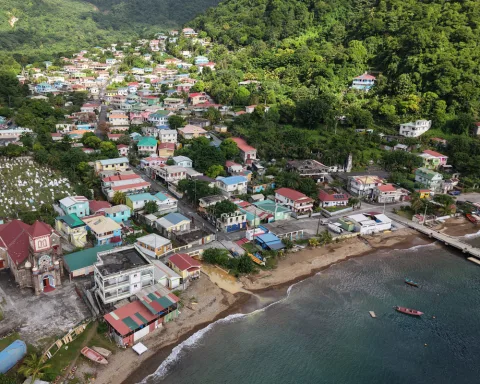
The main concentration of dive shops is around Roseau and Castle Comfort. A smaller cluster works the Soufriere area in the south. A few operate from Portsmouth and the north.
Most shops offer:
- Two-tank day trips (boat dives) for US$110 to $140 with gear.
- Single tank dives at US$70 to $90.
- Discover Scuba intro dives for non-certified divers, US$120 to $150.
- Open Water certification courses, typically 3 to 4 days, US$450 to $550.
- Specialty courses (Nitrox, Advanced Open Water, Rescue) on request.
Shop your dates and preferences with two or three operators before booking. Quality is high across the board, but personality and group size vary.
Cruise day diving
Possible but tight. Confirm with the dive shop that they can do direct pickup from the cruise port and have you back at least 90 minutes before your all-aboard time. A two-tank trip needs at least a 6-hour port window with reliable transport.
Drew
The best cruise-day dive structure: book a single-tank dive at Champagne Reef or Castle Comfort, with snorkelling for non-divers in your group. Two-tank trips work only on the longest port days.
Equipment
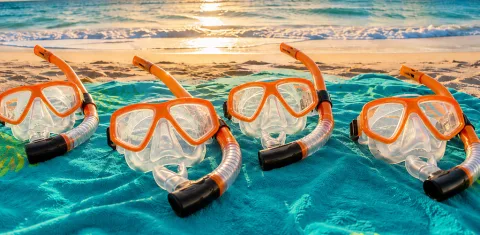
You can rent everything in Dominica. Most shops provide BCD, regulator, mask, fins, weights and tank as part of the dive cost. Bring your own:
- Computer (or rent for an extra US$5 to $10).
- Mask if you have a comfortable one. Rental masks are fine but yours is yours.
- Wetsuit: a 3 mm shorty is the comfortable choice for two-tank days. A rash vest works for warm-water single dives.
- Camera if you have one. Underwater photography conditions are reliably good.
Skill level
Most named sites are accessible to divers with Open Water certification. A few (L'Abym, Scotts Head Drop-Off below 25 m) require Advanced Open Water or equivalent experience.
Currents are not constant but can be strong. If you haven't dived in a while, a refresher dive at Champagne Reef or Castle Comfort is sensible before tackling the south-coast walls.
Pair with
- Diving morning, hot springs afternoon. The classic recovery sequence.
- Diving plus whale watching. Many shops can combine.
- Diving plus snorkelling for non-diving partners. Most operators include surface support.
Scuba Diving in Dominica – FAQ
Is Dominica a good place to scuba dive?
Yes, especially for divers who appreciate volcanic underwater geology, wall dives, and uncrowded sites. The Soufriere–Scotts Head Marine Reserve in the south-west is the headline area and offers some of the best diving in the Caribbean.
What's the best dive site in Dominica?
Scotts Head Drop-Off is the most-recommended for advanced divers. Champagne Reef is the signature easier dive for everyone, including snorkellers.
How warm is the water for diving in Dominica?
~26°C year-round, dropping to ~25°C in February and warming to ~28°C in September. A 3 mm shorty is the comfortable choice for two-tank dives. A rash vest works for single dives in warm water.
Do I need to be an advanced diver to dive Dominica?
No. Most named sites are accessible with Open Water certification. A few of the deeper walls (Scotts Head Drop-Off, L'Abym below 25 m) require Advanced Open Water. Check with your dive shop.
How much does scuba diving in Dominica cost?
US$110 to $140 for a two-tank dive with gear. US$70 to $90 for a single tank. US$450 to $550 for an Open Water certification course over 3 to 4 days.
Is Champagne Reef worth diving?
Yes, especially for divers new to the volcanic vent experience. The bubbles rising through warm water against a healthy reef are unique to Dominica and one of the most photogenic dives on the island.
When is the best time to dive in Dominica?
October to April. Dry-season conditions give 25 to 30 m visibility and the calmest seas. Diving is fine year-round, but visibility drops noticeably during and after the wet-season rain peaks.
Can I do a two-tank dive from a cruise?
Possible but tight. Confirm pickup directly from the cruise port and a return buffer of at least 90 minutes before all-aboard. A 6-hour port window is the minimum.