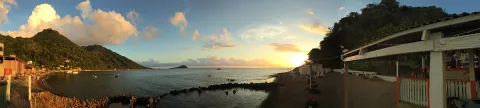
Soufriere–Scotts Head Marine Reserve, Dominica:
Diving Headline
Last updated:
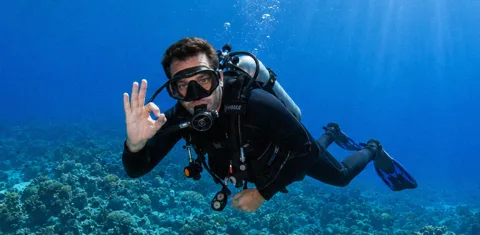
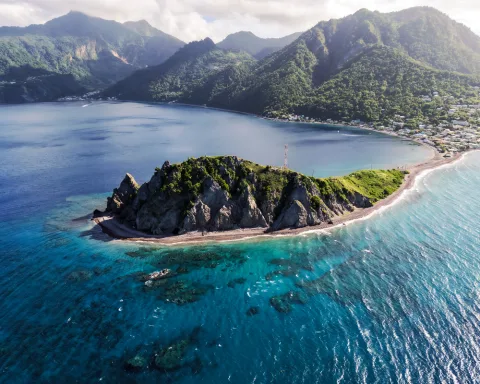
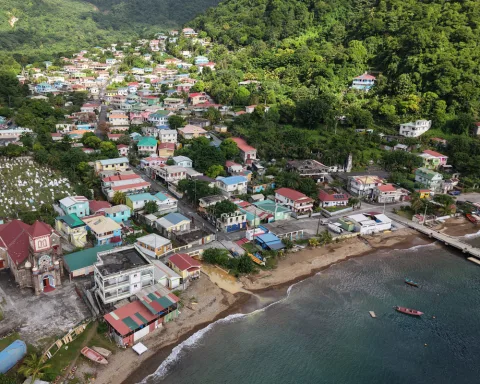
The Soufriere–Scotts Head Marine Reserve protects the underwater landscape of an extinct volcanic caldera at Dominica's south-west tip. The bay between Soufriere village and the Scotts Head peninsula is the partly-submerged volcanic crater itself, dropping from shallow shoreline reefs to wall dives that fall hundreds of metres into the open Caribbean. The reserve is widely considered the best diving and snorkelling area in Dominica, and one of the most unique in the Eastern Caribbean.
Why it matters
Three things make the marine reserve genuinely distinctive:
- The volcanic geometry. Soufriere Bay is the partly-flooded crater of a volcano that erupted out of the seabed and then collapsed. The bay's centre is much deeper than its edges, with the crater rim forming the wall structures that divers descend along. Vertical drop-offs of 30 to 60 m are within easy access of shore.
- Hydrothermal activity. The same volcanic system that powers the Boiling Lake feeds underwater steam vents at multiple sites in the reserve. Champagne Reef is the most famous, with continuous bubbles rising through warm water against a healthy reef.
- Conservation status. The reserve has been actively protected since 1998, with restrictions on fishing, anchoring and reef-damaging activity. Coral health is meaningfully better here than at sites with less protection.
Headline dive sites
Scotts Head Drop-Off
The reserve's most-recommended dive. A wall on the southern edge of the caldera that drops from about 5 m to well over 60 m. Healthy hard corals, black coral colonies, hawksbill turtles, and the occasional eagle ray. Suitable for advanced open water divers because of depth profile.
L'Abym
Dramatic wall and pinnacle structure on the western side of the bay. 30+ m visibility is normal here, with strong currents at depth. Advanced divers only.
Soufriere Pinnacles
A series of volcanic pinnacles rising from the bay floor. Excellent macro diving (frogfish, seahorses, juvenile reef fish) plus mid-range wall sections. Suitable for open water with experience.
Champagne Reef
Technically just outside the formal reserve boundary, but inseparable from the marine reserve experience. Underwater volcanic vents release continuous bubbles up through warm water against a coral and sand bottom. Depth range 5 to 18 m. Suitable for open water and snorkellable in the shallowest sections. See snorkelling in Dominica.
Bubbles Beach
Shore-access bubble vents in shallower water, ideal for snorkelling without a boat. Just north of Soufriere village.
Conditions and visibility
- Water temperature: ~26°C year-round.
- Visibility: typically 25 to 30 m, sometimes higher in dry-season conditions. Drops to 10 to 15 m for a day or two after heavy rain.
- Currents: range from negligible to strong depending on the site and tidal phase. Most operators match site choice to skill level.
For seasonal context see the best time to visit Dominica.
What lives in the reserve
A non-comprehensive list of common encounters:
- Hawksbill and green sea turtles (year-round residents).
- Eagle rays (occasional, more common in dry season).
- Reef sharks (occasional, primarily nurse sharks).
- Frogfish, seahorses, octopuses (concentrated around the Pinnacles).
- Schools of small reef fish (creole wrasse, blue chromis, sergeant majors).
- Black coral, fire coral, sea fans, gorgonians.
- Healthy hard corals including brain, pillar and elkhorn species.
The water is clear enough that even snorkellers see most of these species at depth.
Cost and access
- Site Pass required: US$5 day, US$12 week, US$40 annual. Buy in advance or at the entry points.
- Reef-safe sunscreen required by law inside the reserve.
- Diving through any Roseau or Soufriere-based dive operator: US$110 to $140 for a two-tank trip.
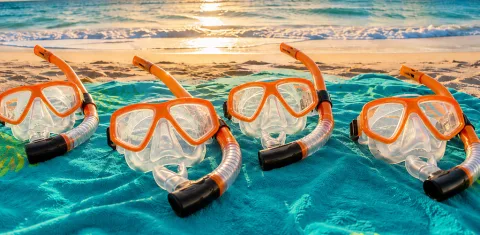
- Snorkelling is free with the Site Pass; gear rental adds US$5 to $15.
- No anchoring is allowed inside the reserve. Dive boats use moorings.
Getting to the reserve
- From Roseau: ~45 to 50 minutes to Soufriere or Scotts Head by car.
- From the cruise port: ~50 to 60 minutes. Possible on a 7+ hour port day.
- By dive boat: most operators handle pickup from the Roseau or Castle Comfort waterfront, then run south by sea.
Conservation rules
The reserve has firm rules. Don't:
- Touch or stand on coral.
- Anchor inside the reserve.
- Take or remove anything (fish, shells, coral, even dead specimens).
- Spear-fish (fishing is restricted to specific zones and methods, controlled by the local fishermen).
- Use chemical sunscreens (reef-safe only).
The reserve is genuinely well-managed. Visiting respectfully is part of why it's still in good shape.
Pair with
- Diving day: Two-tank dive at Scotts Head Drop-Off and L'Abym, with surface time in Soufriere.
- Snorkel day: Champagne Reef plus a shore snorkel at Bubbles Beach, lunch in Soufriere.
- Combined trip: Diving morning, Bamboozay Sulphur Baths afternoon.
Soufriere–Scotts Head Marine Reserve, Dominica – FAQ
What is the Soufriere–Scotts Head Marine Reserve?
A 9 km² marine protected area at the south-west tip of Dominica, established in 1998. It protects the partly-submerged volcanic caldera at Soufriere Bay and the surrounding reefs, including Scotts Head Drop-Off, L'Abym, the Soufriere Pinnacles and Champagne Reef.
Can you snorkel in the marine reserve?
Yes. Champagne Reef and Bubbles Beach are both snorkellable from shore. Other reserve sites can be snorkelled from boat trips. Reef-safe sunscreen is required.
How much does it cost to visit the marine reserve?
Site Pass required: US$5 day, US$12 week, US$40 annual. Diving through an operator runs US$110 to $140 for a two-tank dive. Snorkelling with rented gear is US$10 to $20.
What's the best dive site in the marine reserve?
Scotts Head Drop-Off for advanced divers. Champagne Reef for divers and snorkellers of all levels. L'Abym for advanced wall enthusiasts.
Is the marine reserve good for beginners?
Yes, especially for snorkelling at Champagne Reef and Bubbles Beach. Open water divers can dive most sites; some (Scotts Head Drop-Off, L'Abym below 25 m) require Advanced Open Water.
Are sharks present in the reserve?
Occasionally. Nurse sharks are seen most often. Reef sharks and other species are present but uncommon and typically pose no threat to divers and snorkellers.
Quick look
- Established
- 1998
- Area
- ~9 km²
- Geology
- Submerged volcanic caldera, with associated hydrothermal vents
- Site Pass
- Required (US$5 day / US$12 week / US$40 annual)
- Best for
- Diving, snorkelling, marine biology
- Headline sites
- Scotts Head Drop-Off, L'Abym, Soufriere Pinnacles, Champagne Reef