Culture & People of Dominica:
Creole, Kalinago, Music & Religion
Last updated:
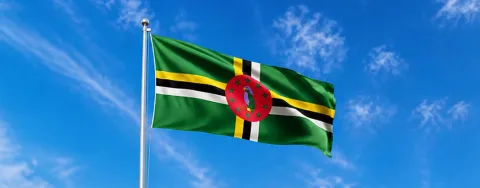
Dominica's culture is Creole in the precise sense: a synthesis of African, French, British and Indigenous Kalinago elements that has produced something distinct from any of its parts. The language people speak, the food they eat, the music they make, the religion they practice and the festivals they celebrate all reflect that synthesis. Add the only remaining Indigenous Caribbean reserve still in existence, and Dominica's cultural mix is unusual even by Caribbean standards.
This page covers the people, languages, religion, music, and festivals. For food specifically, see food and drink in Dominica.
The people
Dominica's population is around 70,000, distributed across the island with the largest concentrations in Roseau (~15,000) and Portsmouth (~4,000). The bulk of the population is Afro-Caribbean, descended from enslaved Africans brought to Dominica during the colonial period.
Other significant components:
- The Kalinago (~3,000), descendants of the Indigenous Caribbean peoples who lived in the islands before European contact. Most live in the Kalinago Territory on the east coast.
- A small mixed-heritage minority (Dominicans of Creole, mixed African-European, Lebanese, Syrian and other backgrounds).
- A growing diaspora returnee population of Dominicans who emigrated to the UK, US or Canada and have returned, often after retirement.
The diaspora itself is large relative to the resident population. Significant Dominican communities live in the UK (especially London), the US (New York, Boston, Miami), Canada (Toronto), and across the Caribbean. Diaspora visits during Independence and Carnival weeks make those periods feel busier than the normal-size population would suggest.
Language
English is official and the medium of education, government and most formal business. Almost everyone speaks it.
Kwéyòl (sometimes written Patwa or Patois; in English usually Antillean French Creole) is the second language, spoken alongside English by most Dominicans, especially in rural areas and informal contexts. It's a French-lexicon creole, closely related to the creoles of Martinique, Guadeloupe and St Lucia, a legacy of the period when French settlers controlled parts of Dominica.
A few greetings worth picking up:
- Bonjou (bohn-zhoo): good morning
- Bonswè (bohn-sway): good afternoon, good evening
- Mèsi (meh-see): thank you
- Mèsi anpil (meh-see ahn-peel): thank you very much
- Sa ka fèt? (sah kah fet): what's happening / what's up?
Visitors don't need to speak Kwéyòl. Picking up greetings is appreciated.
Religion
Dominica is predominantly Roman Catholic, around 60% of the population, a legacy of the French colonial period. Significant Protestant minorities include Methodist, Seventh-Day Adventist, Pentecostal, Baptist, and Anglican. Smaller communities of Rastafarians and other faiths are also present.
Religion plays a meaningful role in public life:
- Sunday is observed as a day of rest. Many shops and services are closed.
- Cathedral and village churches are central to community life, especially outside Roseau.
- Public holidays track the Catholic calendar (Good Friday, Easter Monday, Whit Monday, All Saints' Day, Christmas).
Visitors are welcome at services. Modest dress is expected.
Music
Dominica has a strong musical identity that has produced one of the Caribbean's distinctive home-grown genres. Three to know:
Bouyon
The signature modern Dominican genre. Fast-paced fusion of cadence-lypso, jing-ping, calypso and zouk, originating in Dominica in the 1980s and pioneered by groups like WCK (Windward Caribbean Kulture) and later Asa Bantan, Triple Kay, and Signal Band. The annual World Creole Music Festival in Roseau showcases the genre at its biggest scale.
Cadence-lypso
A 1970s-era hybrid that grew up in Dominica and the French Antilles. Exile One, fronted by Dominican Gordon Henderson, is the foundational band. Cadence-lypso fed directly into the development of bouyon and is a key building block of modern Caribbean music.
Jing-ping
Older rural folk music. Traditionally uses an accordion, boom-boom (bamboo wind instrument), shak-shak (shakers) and graj (a metal grater played with a stick). Still performed at cultural events and the Kalinago Territory.
Festivals and celebrations
The Dominican calendar is structured around several major cultural events. Plan a trip around one if you can; they're the best time to experience contemporary Dominican culture at full volume.
Carnival (Mas Domnik)
Held in the days before Lent (mostly February). The headline cultural event of the dry season. Costume bands, calypso competitions, j'ouvert street parties starting before dawn, and parades through Roseau.
Less commercial than Trinidad's Carnival but bigger and more participatory than most other small-island Caribbean Carnivals.
Domfesta
A month-long arts festival running from mid-May to mid-June, celebrating Dominican literature, theatre, visual arts and music. More cultural than Carnival; smaller stages, more depth.
Dive Fest
Early to mid July. Underwater-themed week with discounted dive packages, marine biology talks, and open-water events. The headline event for divers.
Independence Day and Real Mas
3 November and the surrounding week. Includes:
- Flag-raising and parades in Roseau on Independence Day itself.
- Real Mas: a more traditional, less commercial form of Carnival, focused on traditional costume, folk songs, and historical character bands.
- Creole Day (the Friday closest to 28 October) when most of the country dresses in Madras-pattern Creole attire.
World Creole Music Festival
Late October. Three nights of regional and Dominican zouk, kompa, bouyon, soca and reggae at Windsor Park in Roseau. Major draw for diaspora and regional travellers; the country's biggest single cultural event.
Sport and recreation
Cricket is the dominant sport, played at every level from village pickup games to the West Indies regional team. The national stadium Windsor Park in Roseau hosts international fixtures.
Football has been growing rapidly and the national team plays in the regional leagues. Basketball has a healthy following, particularly among younger Dominicans.
Outdoor recreation, especially hiking, diving and freshwater swimming, is a core part of how Dominicans use the natural landscape.
Visiting respectfully
A few things worth knowing:
- Greet people when you enter a shop or restaurant. Bonjou in the morning, bonswè afterwards. It's a meaningful courtesy.
- Ask before photographing people, especially in the Kalinago Territory and rural villages.
- Dress modestly in towns. Beach attire is fine on the beach, less so in Roseau or village shops.
- Sunday is quiet. Plan accordingly.
- Don't haggle aggressively. Prices in markets and craft stalls are reasonable.
Culture & People of Dominica – FAQ
What is the main religion in Dominica?
Roman Catholicism, around 60% of the population, with significant Protestant minorities. Religion plays a meaningful role in public life and most public holidays follow the Catholic calendar.
What language do Dominicans speak?
English is the official language and universal. Kwéyòl (Antillean French Creole) is widely spoken alongside English, especially in rural areas. Visitors only need English.
What music is Dominica known for?
Bouyon is the signature modern genre, originating in Dominica in the 1980s. Cadence-lypso is the older parent genre, with Dominican groups like Exile One central to its development.
When is Carnival in Dominica?
The two days before Ash Wednesday, mostly in February. Costume bands, calypso, j'ouvert. Less commercial than Trinidad but participatory and lively.
What is the World Creole Music Festival?
A three-night music festival in late October, held at Windsor Park in Roseau. Showcases regional and Dominican zouk, kompa, bouyon, soca and reggae. The country's biggest annual cultural event.
Are Dominicans friendly to tourists?
Yes, very. Dominica has a low rate of tourist-targeted crime and a culture that rewards politeness. Greet people, be patient, and you'll find Dominicans warm and helpful.