Freediving in Dominica:
Soufriere Bay & the Volcanic Caldera
Last updated:

Must Do

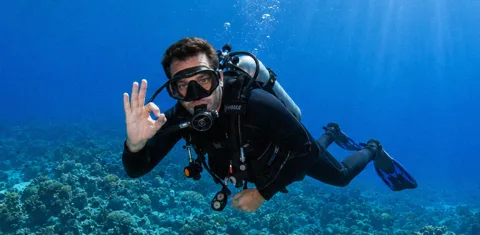
Walls that drop hundreds of metres, resident sperm whales, and visibility that goes and goes. Dominica is one of the few places in the world where a single breath gets you somewhere extraordinary.
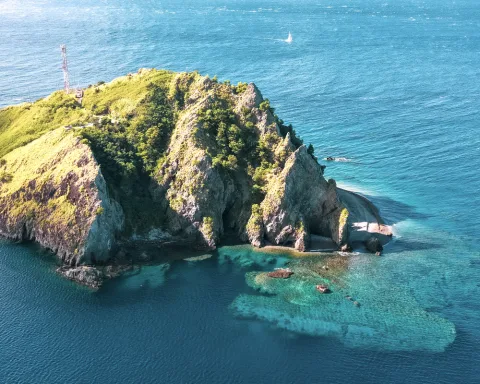
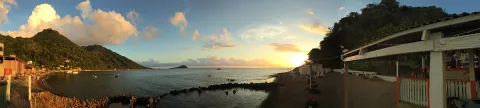
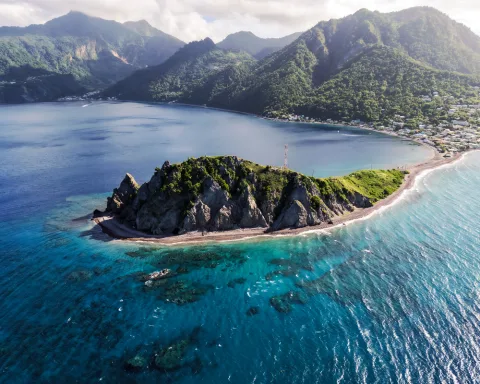
Dominica doesn't have the freediving name recognition of the Red Sea or the Azores, but it arguably should. The island's south-west corner is the partly-submerged crater of an extinct volcano, and the underwater geometry that results — near-vertical walls dropping from snorkel depth to beyond 60 m, clear Caribbean water, and some of the most distinctive marine life in the Eastern Caribbean — makes Soufriere Bay one of the more compelling freediving destinations in the region.
No crowds. No mass-tourism infrastructure. Just a volcanic bay, warm water, and walls.
Why Soufriere Bay for freediving
Most Caribbean freediving happens over flat reefs or in dedicated blue-water sites. Soufriere is different. The bay is the caldera of a sunken volcano, with the crater rim forming underwater cliff structures that begin just below the surface and fall in near-vertical drops. That geometry suits freediving unusually well: the wall is right there from your first breath-hold, without the long shallow swim-out that most reef sites require.
Three factors combine to make this exceptional:
- Immediate depth. The drop-offs at Scotts Head begin at around 5 m and fall to over 60 m. You're on the wall within seconds of the surface.
- Visibility. In the dry season (October to April), horizontal visibility consistently reaches 25–30 m. Even in the wet season, 15–20 m is typical. Freediving in this clarity is a different experience from most dive destinations.
- Volcanic features at recreational depth. The bubble vents at Bubbles Beach and Champagne Reef sit at 1–18 m — the exact range where breath-hold diving is most rewarding. Swimming through a column of volcanic bubbles on a single breath-hold is unlike anything else in the Caribbean.
The headline freediving sites
Scotts Head Drop-Off
The most dramatic site in the Soufriere–Scotts Head Marine Reserve. The wall drops from around 5 m at the top to well past 60 m on the southern edge of the caldera, where Soufriere Bay meets the open Caribbean. Healthy hard coral and black coral on the wall face. Hawksbill turtles are common. Eagle rays appear regularly in the water column.
For freedivers, the top of the wall is reachable on a single moderate breath-hold. Diving the wall itself down to 20–30 m is possible for trained freedivers with good technique. The site also benefits from the convergence of the bay's warmer sheltered water and the cooler open Caribbean — a thermocline that creates interesting visibility layering.
Best for: experienced freedivers comfortable on walls; anyone wanting maximum depth access in minimum surface swim time.
Soufriere Pinnacles
Several volcanic pinnacles rise from the floor of Soufriere Bay at mid-range depths. For freediving, these are particularly good because you can circumnavigate a pinnacle on a single breath-hold, descending one face and ascending the other. Macro life is abundant. The pinnacles also create interesting current eddies that make mid-water hovering more dynamic.
Best for: intermediate freedivers; training dives before committing to the full Scotts Head wall.
Bubbles Beach
A small black-sand cove just north of Soufriere village. The volcanic vents sit in 1–5 m of water, releasing a continuous stream of bubbles through warm water against a reef. This is shallow freediving at its best: easy shore entry, no current, and a genuinely unusual sensory experience. Swimming head-down through an active vent column on a breath-hold, with warm water rising around you and the bubbles streaming past, is something that doesn't translate well to photographs.
The beach is quieter than Champagne Reef (the more famous vent site further north). Local opinion consistently rates it the better experience for exactly this reason.
Best for: all levels; an ideal first-dive warm-up or a standalone short session; snorkellers graduating to their first freediving dips.
Champagne Reef
The more famous bubble-vent site, about 15 minutes north of Soufriere. Volcanic vents at 5–18 m depth against a healthier and larger reef structure than Bubbles Beach. The shallower sections are excellent for freediving; trained freedivers can reach the deeper vent areas at 15–18 m comfortably.
More visited than Bubbles Beach — cruise excursions come here regularly — but the underwater experience is exceptional and the reef is one of the best-preserved in Dominica.
Best for: freedivers wanting more reef coverage than Bubbles Beach; the best single site to combine breath-hold diving with marine-life encounters.
L'Abym
A wall and pinnacle dive in the deeper Soufriere area. Visibility here is consistently among the clearest in the reserve — 30 m is common. The name means "the abyss" in Dominican Creole, which fairly represents the feeling of looking down the wall. Strong currents at depth make this a site for experienced freedivers only. Not appropriate for solo diving.
Best for: advanced freedivers; a dedicated session rather than a drop-in.
Conditions
Water temperature
~26°C year-round. It drops to ~25°C in February and reaches ~28°C in September. No wetsuit is needed for short sessions. For longer training sessions or multiple breath-hold dives over several hours, a 2–3 mm shorty adds comfort without limiting mobility.
Visibility
Consistently good. Dry season (October to April): 25–30 m. After heavy rainfall in the wet season, run-off can reduce visibility to 10–15 m for a day or two. The bay's caldera orientation also means that some sites are more sheltered from weather swell than others — ask locally before going to L'Abym or Scotts Head after rough weather.
Currents
Negligible at Bubbles Beach and the Pinnacles. Can be moderate to strong at Scotts Head Drop-Off and L'Abym, particularly at depth. Conditions change by day and by tidal state. Don't assume — check current conditions with a local dive shop before planning a Scotts Head session.
Boat access
Most of the wall sites (Scotts Head Drop-Off, L'Abym, and the deeper Pinnacle areas) are accessed by boat from Soufriere or Scotts Head village. Bubbles Beach and the shallower Champagne sections are shore-entry. Dive operators in the Soufriere area run boat charters; freediving sessions can be arranged privately with most operators.
Practical information
Site Pass
The Soufriere–Scotts Head Marine Reserve requires a Site Pass for all water users. US$5 for a day pass, US$12 for a week. Pay at the reserve office or through your operator. Bubbles Beach itself sometimes falls outside the formal pass zone — confirm locally.
Gear
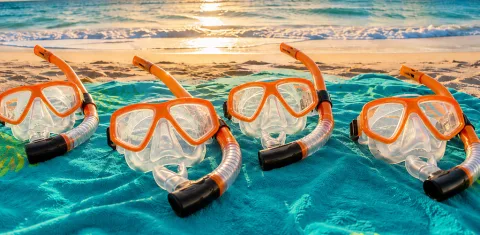
Bring your own if possible. Mask, fins, wetsuit (optional), lanyard, and dive flag are the minimum. Long-blade freediving fins work well on the walls but are less practical at Bubbles Beach — a standard snorkel fin is fine there. Gear rental is available through dive shops in the area, though dedicated freediving fins are unlikely to be stocked. Reef-safe sunscreen is required in the marine reserve.
Going with an operator
There is currently no freediving-specialist operator based permanently in Dominica, but scuba dive shops in the Soufriere–Roseau corridor regularly take freedivers out and can advise on conditions, depth, and site selection. It's worth calling ahead to confirm what boat space is available and whether a safety diver can be arranged for deeper sessions.
Solo diving
Don't. This applies on any breath-hold dive, but particularly at sites with current (Scotts Head, L'Abym). Shallow-water blackout is a real risk on freediving and requires a surface buddy who knows what to watch for.
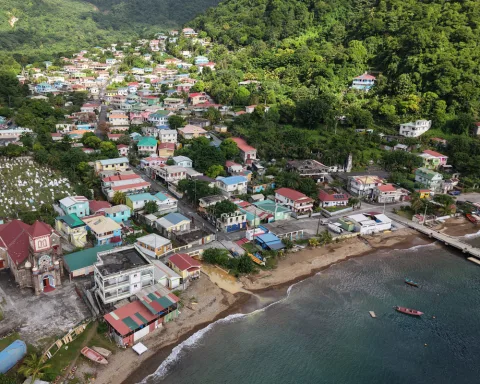
Getting to Soufriere
- From Roseau: ~45 minutes by car along the south-west coast road.
- From Douglas-Charles Airport (north): ~1 hour 45 minutes via the cross-island road.
- By minibus: shared minibuses run from Roseau to Soufriere several times daily.
Pair with
A freediving session at Soufriere combines naturally with the rest of the south coast's offer. After a morning in the water, Bamboozay Sulphur Baths — five minutes up the hill from the village — is a worthwhile end to the day. The same volcanic system that creates the bubble vents and the drop-offs feeds the mineral pools at Bamboozay; coming up from the ocean and getting into hot sulphur water is a logical sequence.
For a longer stay, the Waitukubuli National Trail Segment 1 starts from Soufriere and runs to Scotts Head — a coastal hike that gives the full geological picture of the caldera on foot before you see it underwater.
Freediving in Dominica: frequently asked questions
Is Dominica good for freediving?
Yes — particularly Soufriere Bay on the south-west coast. The underwater caldera geometry means walls drop from snorkel depth to over 60 m, visibility is consistently 20–30 m, and the bubble vents at Bubbles Beach and Champagne Reef are unique in the Caribbean. It's less well-known as a freediving destination than its diving reputation deserves.
Do I need a guide or boat to freedive in Dominica?
For Bubbles Beach and the shallower Champagne Reef sections, shore entry is straightforward. For the wall sites — Scotts Head Drop-Off, L'Abym, the deeper Pinnacles — you'll need a boat and a buddy. Local dive operators can arrange this.
Is there a freediving school in Dominica?
No dedicated freediving-only school operates permanently on the island as of 2026. Scuba operators in the Soufriere–Roseau area are generally helpful for boat access and conditions advice. Bring your own certification and training.
What's the water temperature for freediving in Dominica?
~26°C year-round. A 2–3 mm shorty adds comfort for longer sessions; it isn't strictly necessary for short dives.
Do I need a Site Pass to freedive in the marine reserve?
Yes. The Soufriere–Scotts Head Marine Reserve Site Pass costs US$5 per day or US$12 per week. It's required for all water users, including freedivers and snorkellers.
What's the best time of year to freedive in Dominica?
October to April. The dry season brings the clearest visibility (25–30 m), calmest seas, and the most reliable conditions for wall sites. Freediving is possible year-round but visibility drops after heavy wet-season rainfall.
Can I freedive at Champagne Reef?
Yes. The shallower sections of Champagne Reef (5–10 m) are ideal for breath-hold diving. The volcanic vents and reef fish are well within recreational freediving range. The deeper sections (15–18 m) are accessible for trained freedivers.
Quick look
- From Roseau
- ~45 minutes by car
- Water temperature
- ~26°C year-round
- Visibility
- 20–30 m typical (best Oct–Apr)
- Headline depth
- Walls begin at 5 m
Drop to 60 m+ at Scotts Head - Site Pass
- US$5 day / US$12 week
Required for marine reserve - Best season
- October to April