Roseau, Dominica:
The Capital City Guide
Last updated:
Roseau is Dominica's capital and largest town, with a population of about 15,000. It sits on the south-west coast at the mouth of the Roseau River, with the cruise port and Bay Front along the waterfront and the older streets climbing inland through low-rise colonial buildings. Most accommodation, dive shops, tour operators and government offices are based here. For most visitors, Roseau is either where you spend the day during a cruise stop, or the practical hub from which you drive out to the rest of the island.
The town isn't a major standalone destination. It is, however, easy to walk, friendly, and the place to get a real sense of contemporary Dominican life away from the rainforest interior.
What Roseau is like
"It's a vibrant city during the day but quiet at night. There are pockets of activity though, whether that's DJs, karaoke or live bands playing. During the day there is the local market by The Fresh Market store, that's great for local fruits and food. Near the port there's a visitors centre, I'd recommend popping in and getting the lay of the land."
Drew
The pace is small-town. Civil servants, traders, fishermen and craft sellers fill the streets during the day. Restaurants are busy at lunch, quieter in the evening. Most shops close by 5 or 6 PM. After dark the centre empties, with activity concentrating in a few specific bars and music venues.
Roseau is safe to walk during the day. Use ordinary city sense, watch your belongings in busy markets, and you'll be fine. Walking around the edges of town after dark is less recommended; stick to the main streets if you're moving around in the evening.
What to see in central Roseau
The Bay Front (Dame Eugenia Charles Boulevard)
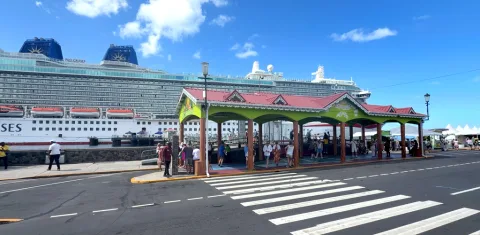
The waterfront strip running along Roseau's western edge, named after Dominica's first female prime minister. Walk it end to end in 15 minutes. The cruise port is at the centre. Restaurants, cafés, the Tourism Office and souvenir stalls line the seaward side. Worth a slow morning walk before the heat builds.
The Old Market
Historic produce and craft market, two blocks inland from the Bay Front, in continuous use since the 18th century. Currently houses craft and souvenir stalls. Worth 15 minutes for the building itself and the atmosphere even if you're not buying.
Dawbiney Market Plaza and the New Market
The working produce market, a short walk south. The fresh fruit, vegetables, and hot food here is meaningfully better and cheaper than the Bay Front stalls. Saturday morning is the busiest day, when farmers from the interior bring produce to town. Look for breadfruit, dasheen, christophine, plantain, and the daily catch of fresh fish.
Roseau Cathedral
Stone cathedral on Virgin Lane, built and rebuilt over the 19th century. Worth ten quiet minutes for the interior. Most active service times are Sunday morning.
The Dominica Museum
Small museum near the Bay Front covering the country's natural history, Kalinago heritage, colonial period, and political history. Modest in scale but well-curated. Useful as context before visiting the Kalinago Territory or Fort Shirley.
The Botanic Gardens
40-acre gardens on the eastern edge of town, founded in 1891. Mature trees, walking paths, and the famous "school bus crushed under a baobab" tree, a relic of Hurricane David in 1979. Bench-and-shade break from the city.
The Visitors Centre
Located near the cruise port. Free maps, current cruise schedule, advice on tours and operators. Recommended first stop for any independent traveller arriving in town.
Where to eat
A short list of places that consistently get recommended by Dominicans, not just by guidebooks:
- Pearl's Cuisine (King George V Street). Long-running Dominican spot, Creole food, lunch only.
- Cocorico Café (Bay Front). Easy stop for breakfast, sandwiches, and coffee.
- Old Market hot food vendors. Look for bakes and saltfish, callaloo soup, fresh fish broth, roti. Cheap, authentic, eat where Dominicans eat.
- Dawbiney Market. Cheap fresh fruit (mango, papaya, soursop, golden apple, sapodilla in season).
- Local rum shops scattered around the centre. Order Bounty (the local white rum) with coconut water.
For the more developed restaurant scene, see food and drink in Dominica.
Where to stay
Roseau itself has a handful of practical hotels and guesthouses, particularly useful if you have an early ferry, a cruise day, or are using Roseau as a transit base. For a longer stay, most travellers prefer the Roseau Valley (eco-lodges in the rainforest above town, easy access to hikes) or Castle Comfort (just south, dive-focused). See where to stay in Dominica.
Walking routes
Two routes that cover the highlights without backtracking:
The "cruise day" loop (90 minutes)
Cruise port → Tourism Office → Old Market → Dawbiney Market → Roseau Cathedral → Bay Front → cruise port. Good for first-time visitors with limited time.
The "longer morning" loop (3 hours)
Cruise port → Bay Front → Dominica Museum → Old Market → Dawbiney Market → Roseau Cathedral → Botanic Gardens → back via Hillsborough Street. Ends with shade in the Botanic Gardens before lunch.
Cost and practicalities
- Walking is free. No tickets needed for the streets, markets, or Bay Front.
- Dominica Museum: small admission fee (US$3 to $5).
- Cathedral and Botanic Gardens: free.
- Toilets: at the Tourism Office, the cruise port, the larger restaurants and the Botanic Gardens.
- ATMs: several around the centre. Cards work for larger purchases.
- Mobile signal: strong throughout central Roseau.
Getting there
- From the airport (DOM): ~1 hour by taxi or shared transfer.
- From Portsmouth: ~1 hour by minibus or rental car.
- From Trafalgar village or Wotten Waven: 25 to 30 minutes.
- By cruise: ships dock at the Roseau Cruise Ship Berth on the Bay Front.
Roseau, Dominica – FAQ
What is there to do in Roseau?
Walk the Bay Front, visit the Old Market and Dawbiney Market, see the Cathedral, the Dominica Museum, and the Botanic Gardens. Allow 2 to 4 hours for the central area. Most travellers use Roseau as a base for day trips to the interior rather than a destination on its own.
Is Roseau worth visiting?
Yes, especially as part of a longer Dominica trip. The town is small and walkable, the markets are good, and it's the easiest way to see contemporary Dominican life. Most cruise passengers see only the Bay Front, which is the least interesting part.
Is Roseau safe for tourists?
Yes during the day, with normal city caution. The town has a low rate of tourist-targeted crime. After dark, stick to the main streets and well-lit areas.
Where should I eat in Roseau?
Pearl's Cuisine for sit-down Dominican food, Cocorico Café for breakfast, and the Old Market hot food vendors for cheap authentic stuff. Walk into Dawbiney Market for cheap fresh fruit.
What's the best market in Roseau?
Dawbiney Market and the New Market for produce, hot food and local life. The Old Market for craft and souvenirs. Saturday morning is the busiest and most-recommended day to visit.
How do you get from the cruise port to Roseau?
You're already in it. The cruise port is in central Roseau on the Bay Front. The Tourism Office is steps away from the gangway, and most of the central sights are within a 15-minute walk.
Can you do Roseau and rainforest in the same day?
Yes, easily. A morning at Trafalgar Falls plus an afternoon walking central Roseau is a strong day for first-time visitors. The drive is 25 minutes each way.
Quick look
- Population
- ~15,000
- From the airport (DOM)
- ~1 hour by car
- Cruise port
- Roseau Cruise Ship Berth, Bay Front
- Best time to walk
- Morning to mid-afternoon
- Time to allow
- 2 to 4 hours for the main central area
- Walkable area
- About 1 km² of central town